
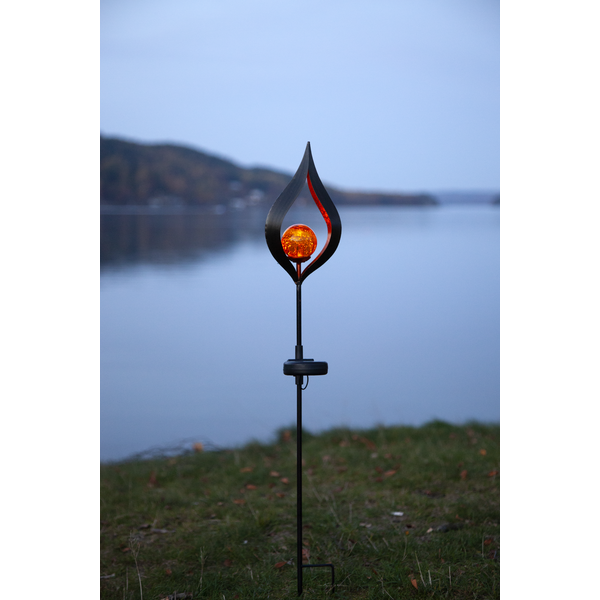
Solar Garden Lights
Solar garden lights charge themselves in daylight and switch on by themselves at dusk – no cables to run, no socket to find, nothing on your electricity bill. The ones we've picked here are the models we'd actually put in our own gardens: warm light, honest build quality, and a look that earns its place whether it's edging a path or hanging over the dinner table.
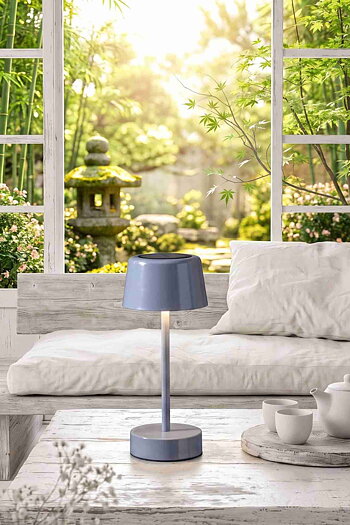
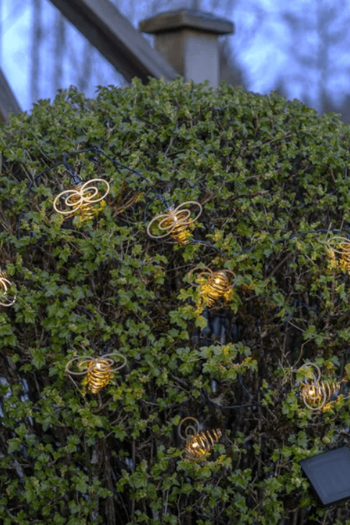

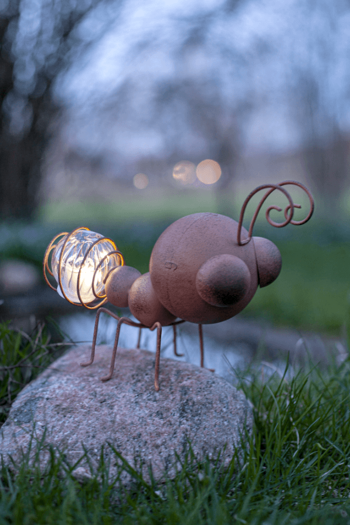

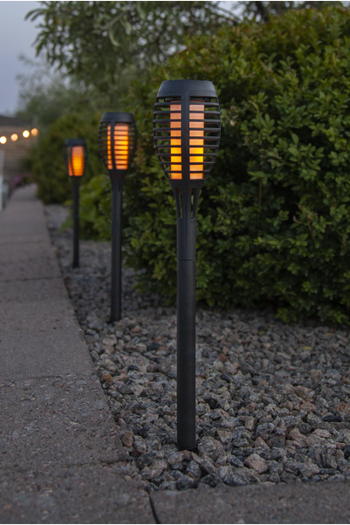
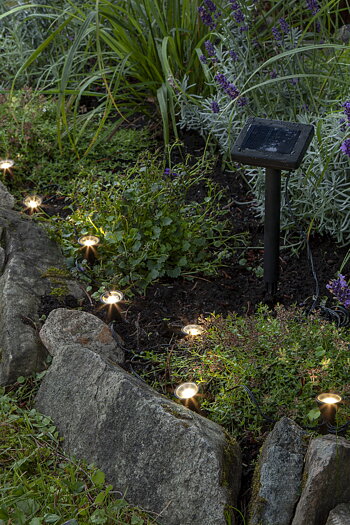
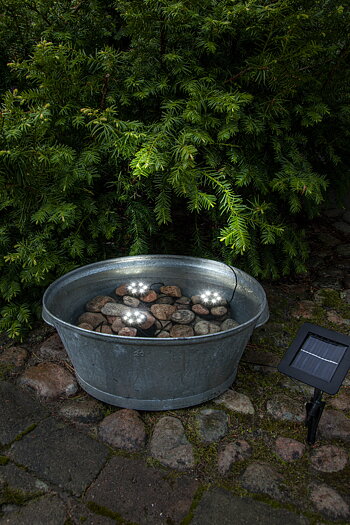
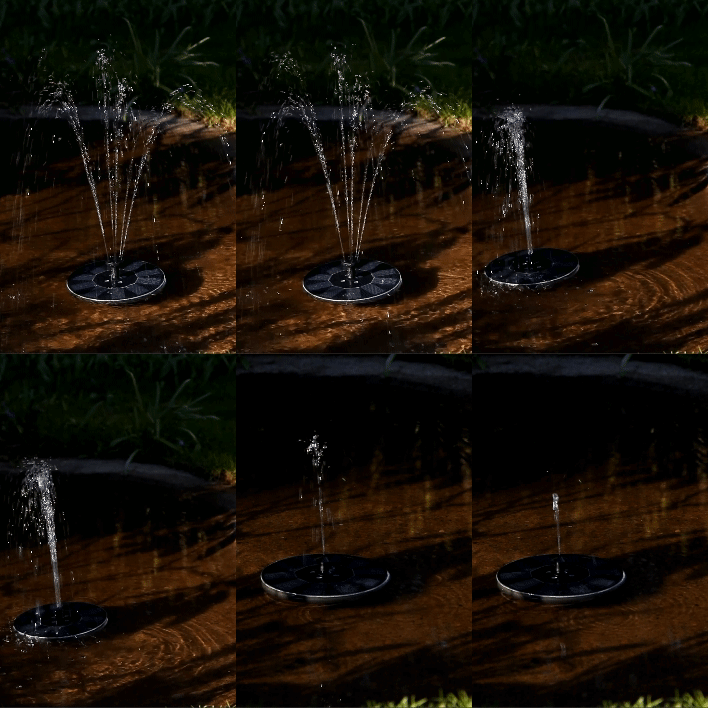
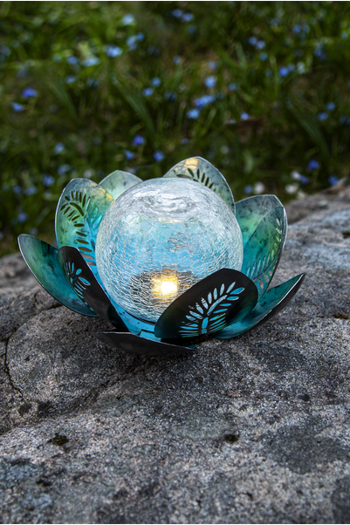
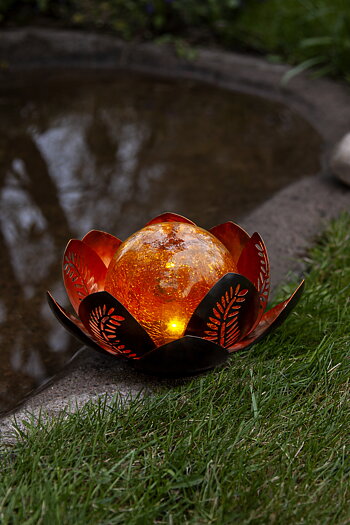
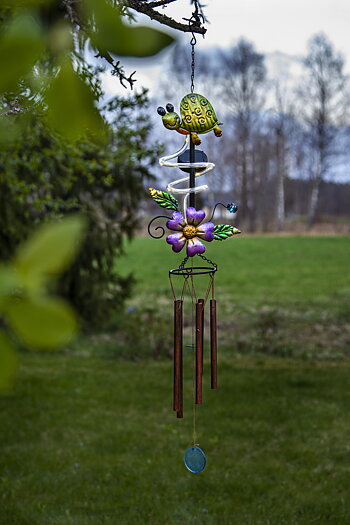
How solar garden lights work
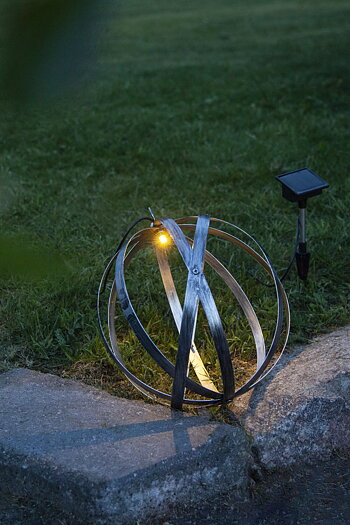
Each light has a small solar panel that tops up a rechargeable battery through the day. When the built-in light sensor notices dusk, the light comes on by itself and runs on what it stored – usually six to eight hours, depending on the model and how much sun the panel caught. No timer, no switch, no wiring. On cloudy days the panel still charges, just more slowly, so winter runtimes are shorter than midsummer ones. The single thing that decides how well a solar light performs is where its panel sits – more on that below.
Types of solar lights to choose from
Our range covers the whole outdoor space, and different jobs want different lights:
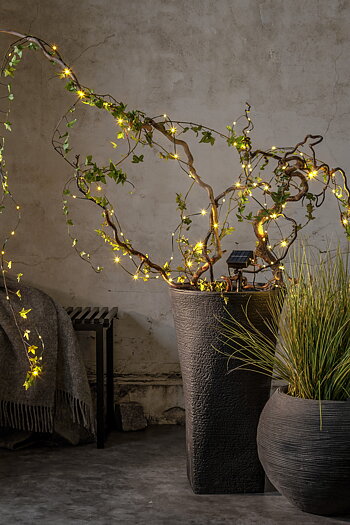
- Solar string lights for framing a pergola, railing or parasol with a soft line of light
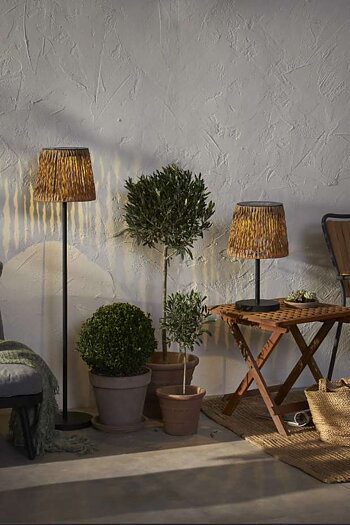
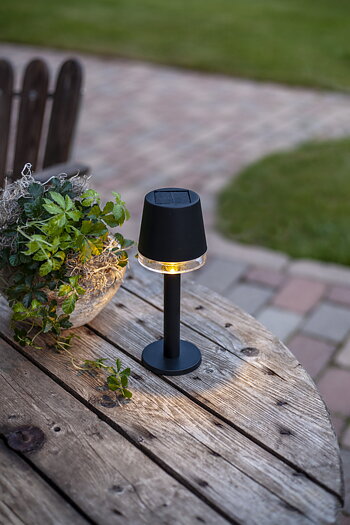
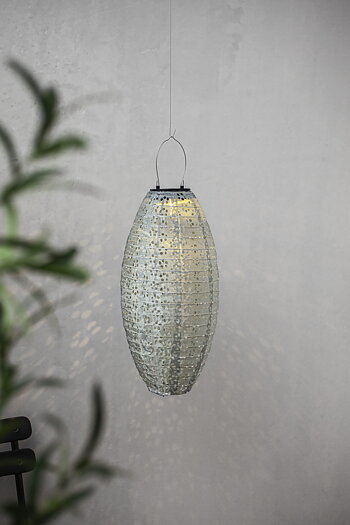
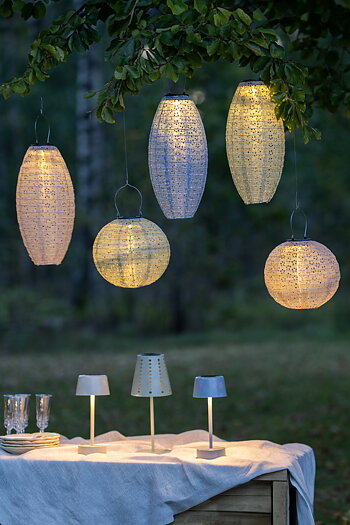
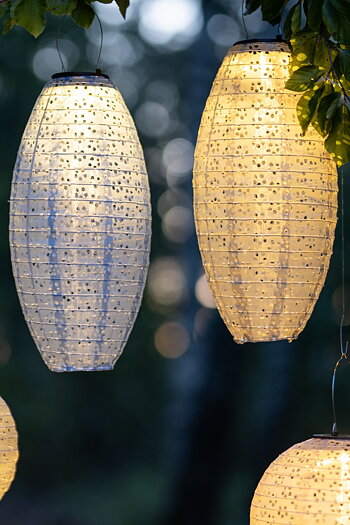
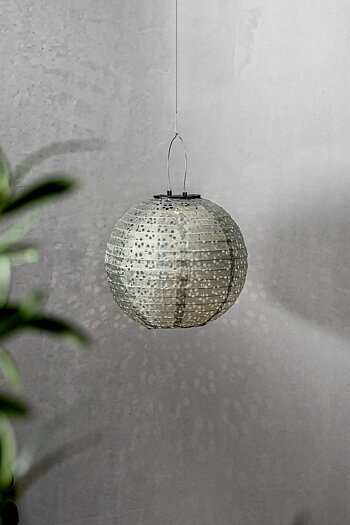
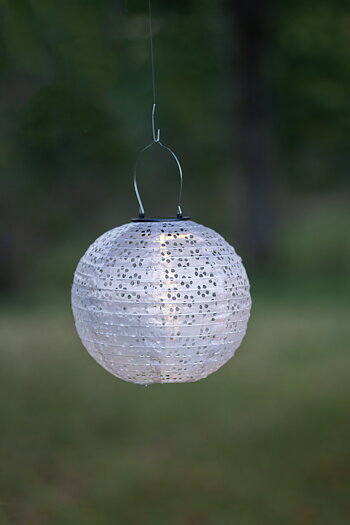
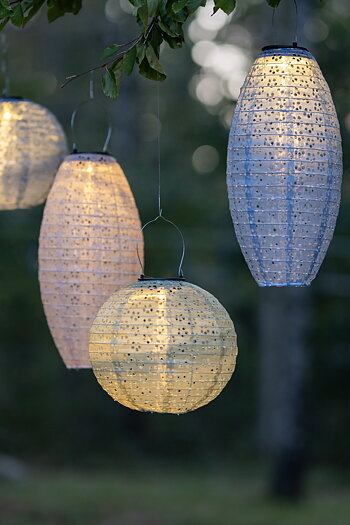
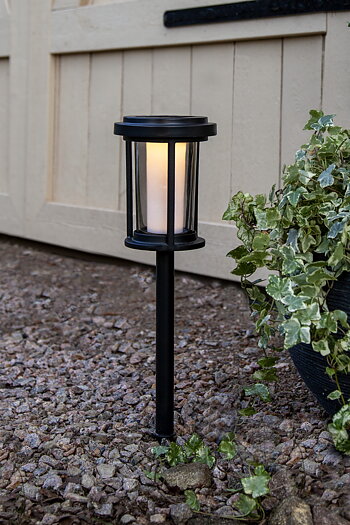
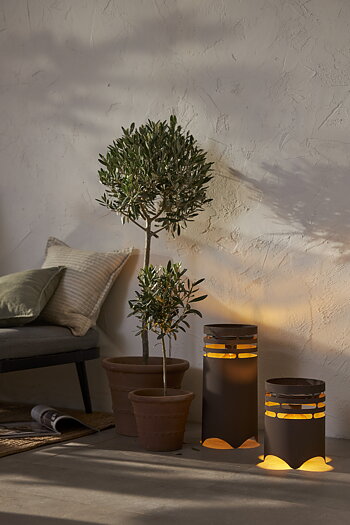
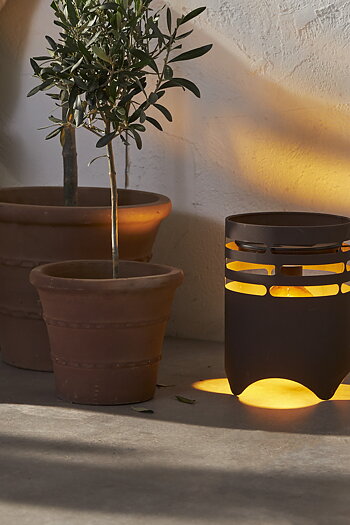
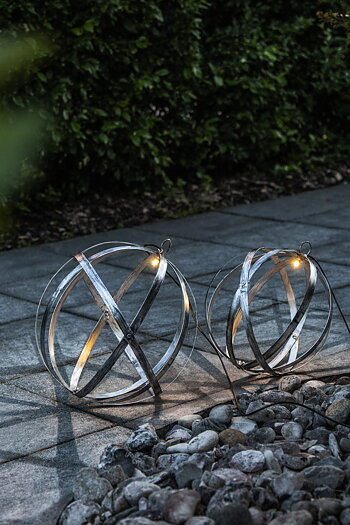
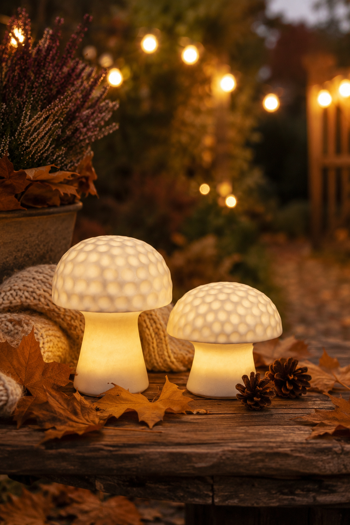
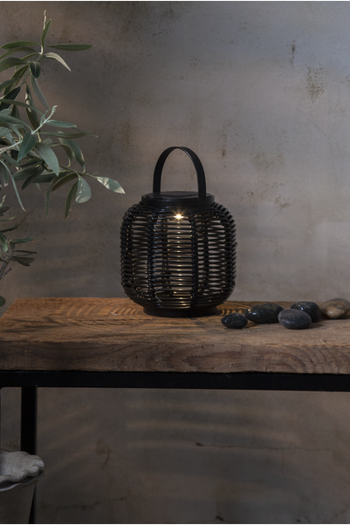
- Solar lanterns for a table, a hook or a border stake – the cosy, moveable option
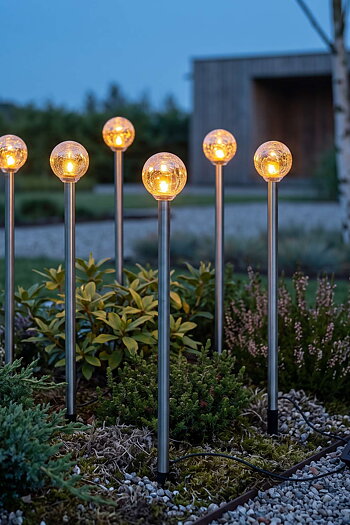
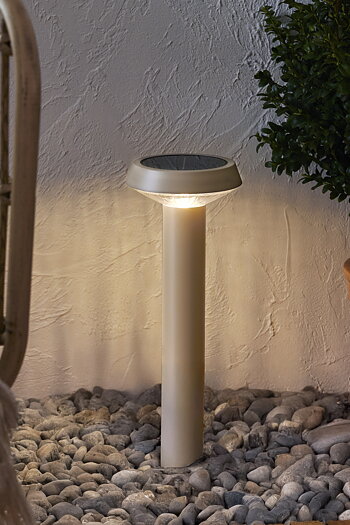
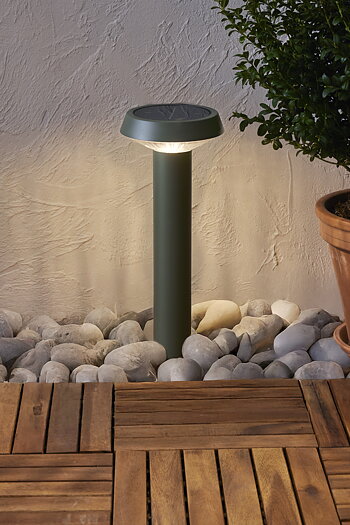
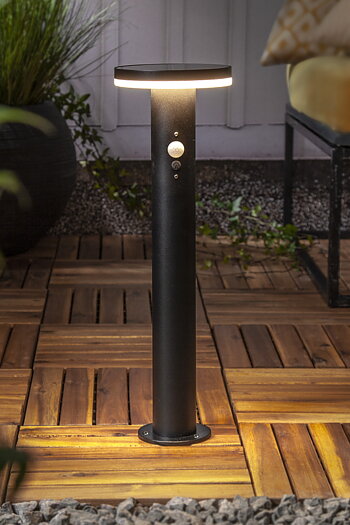
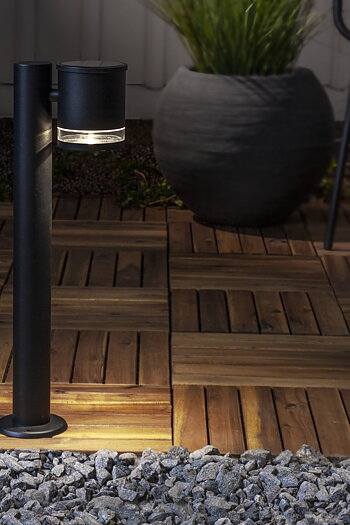
- Solar path lights and pollards for lining a walkway or driveway safely
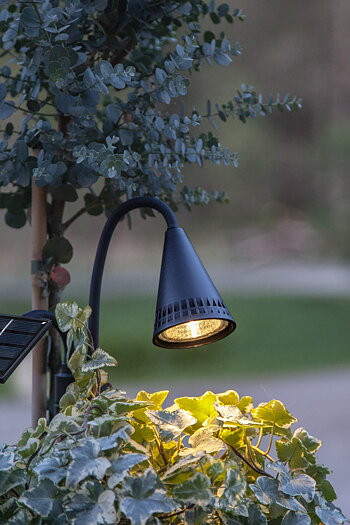
- Solar spotlights to pick out a tree, a shrub or a climbing plant on a trellis
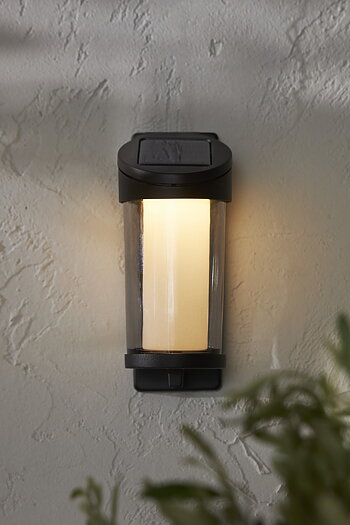
- Solar wall and fence lights for the façade or entrance without calling an electrician
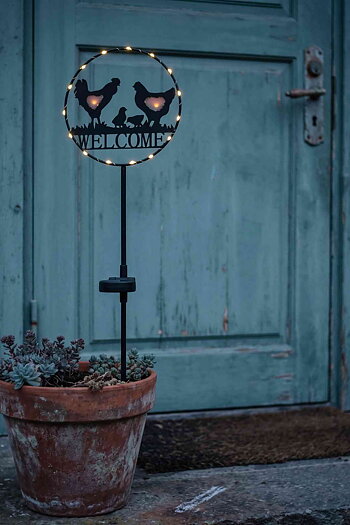
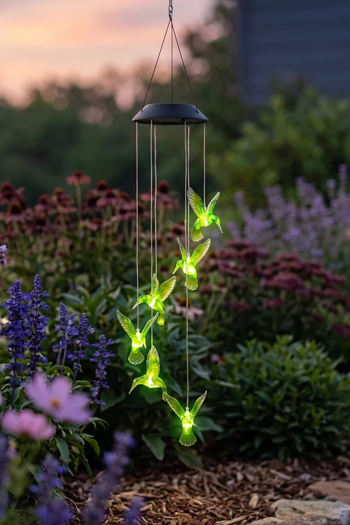
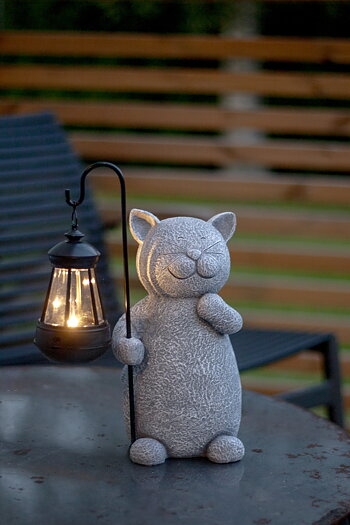
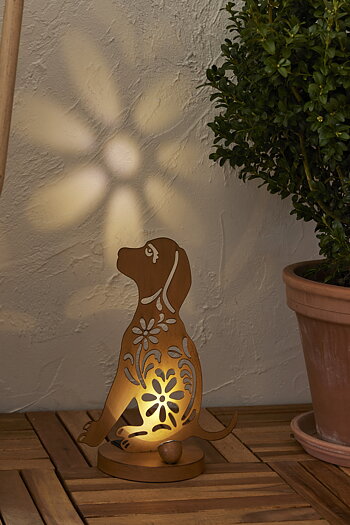
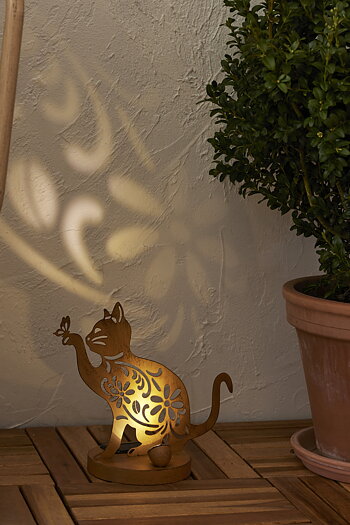
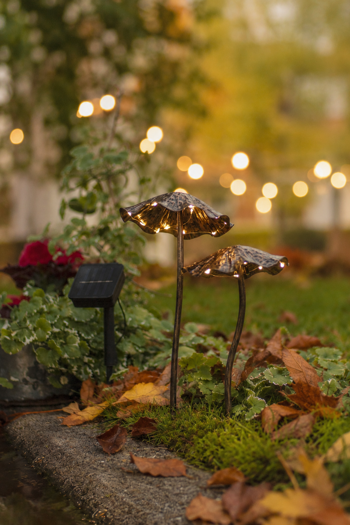
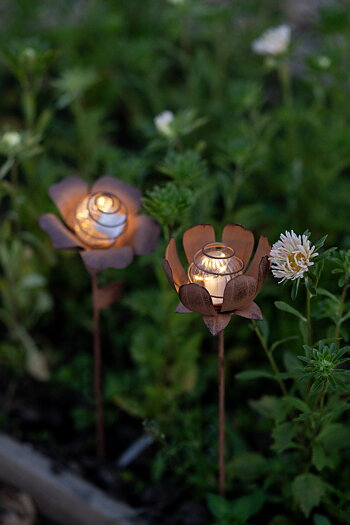
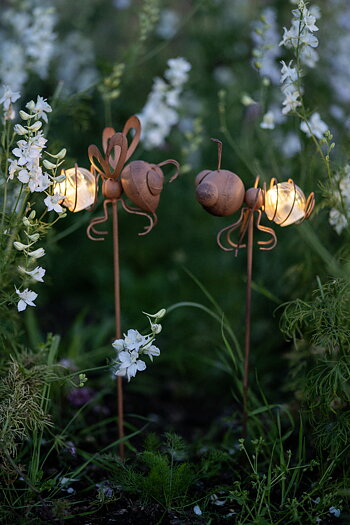
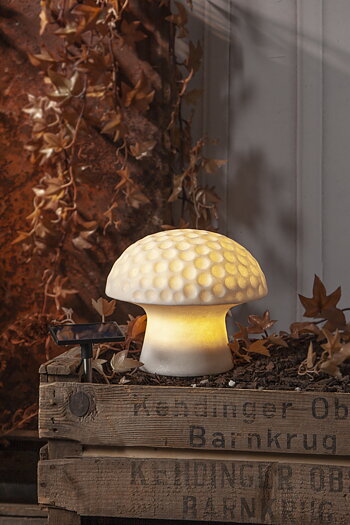
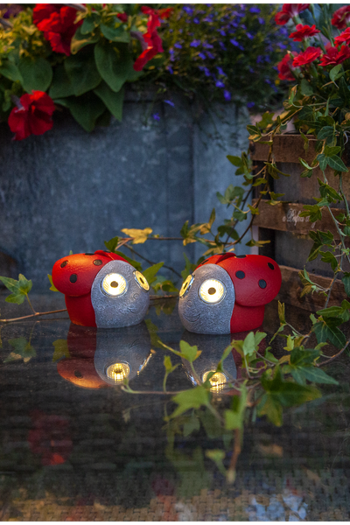
- Solar decorations and figures for a bit of character in a flowerbed or pot
Getting the most light out of them
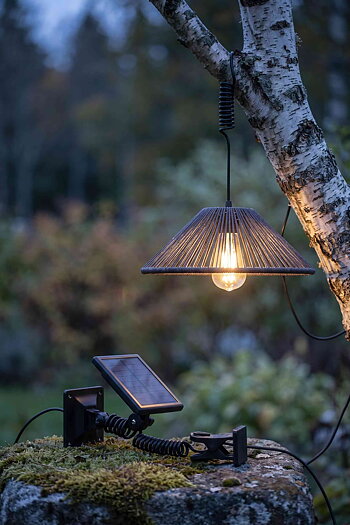
Placement does most of the work. Put the panel where it gets the longest, most direct daylight you can give it, keep it clear of shade from walls and shrubs, and wipe dust and leaves off the panel now and then. Many of our string lights have the panel on a two-metre lead, so you can tuck the lights under a covered patio and still run the panel out into the sun. If you want light in the darkest months, look for models with a larger panel or a swappable rechargeable battery.
FAQ
Do solar garden lights work in winter and on cloudy days?
Yes. The panel charges in overcast weather too, just at a lower rate, and shorter winter days mean shorter run times. Good placement in full daylight keeps them working year-round.
How long do they stay lit?
A full charge typically gives six to eight hours, varying with the model, battery size and how much sun the panel got that day.
Are they hard to install?
No. Most push straight into the ground on a stake, or hang from a hook or bracket. There are no cables and no socket involved – you place them and you're done.